Travel has always involved trade-offs. Convenience versus cost. Planning versus flexibility. Comfort versus effort.
What’s changed in recent years isn’t that travel has become effortless — it’s that many of the small, persistent frictions we once accepted as “just how travel works” no longer need to exist.
When I look back even three or four years, the difference is stark. Not because today’s apps and tools are flashy, but because they quietly remove mental load. Less refreshing pages. Less second-guessing. Less scrambling for information when you should already be on your way.
Here are a few new and upcoming travel apps and tools to help make your travels easier.
Book “Sold-Out” Award Nights Without Refreshing Pages All Day
If you’ve ever tried to book a high-demand hotel with points, you’ve likely seen this message: No award availability.
What’s frustrating is that this availability often does exist — it just appears briefly, when someone else cancels.
MaxMyPoint monitors award inventory across Marriott, Hyatt, Hilton, and IHG and alerts you when a points-bookable room opens up. For aspirational properties where standard rooms disappear instantly, this is often the only realistic way to book with points without paying cash.
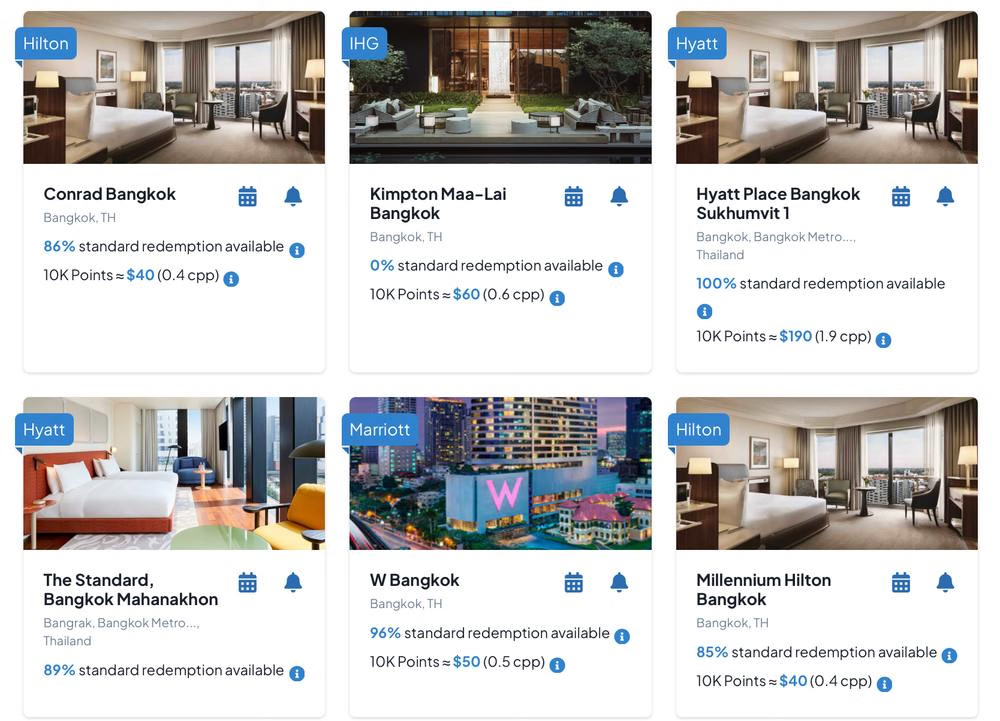
It doesn’t create availability out of thin air. What it does is catch cancellations you’d never find manually, no matter how often you refresh.
The Fastest Way to Tell if a 4.5-Star Hotel Will Actually Ruin Your Stay
When you travel often, you’re constantly staying in places you’ve never been to before. And realistically, the only way to judge a hotel without firsthand experience is through reviews.
The problem is that the thing you actually need to know — whether rooms are quiet, Wi-Fi is stable, or the hotel turns into a nightclub at night — is often buried somewhere on page 36 of the reviews. You don’t have time to read that much, especially when you’re booking on the go.
Revyu.AI (Chrome Extension) addresses this exact gap. Instead of scrolling endlessly, it lets you ask direct questions and pulls answers from recent guest reviews, summarizing what multiple people have actually experienced.
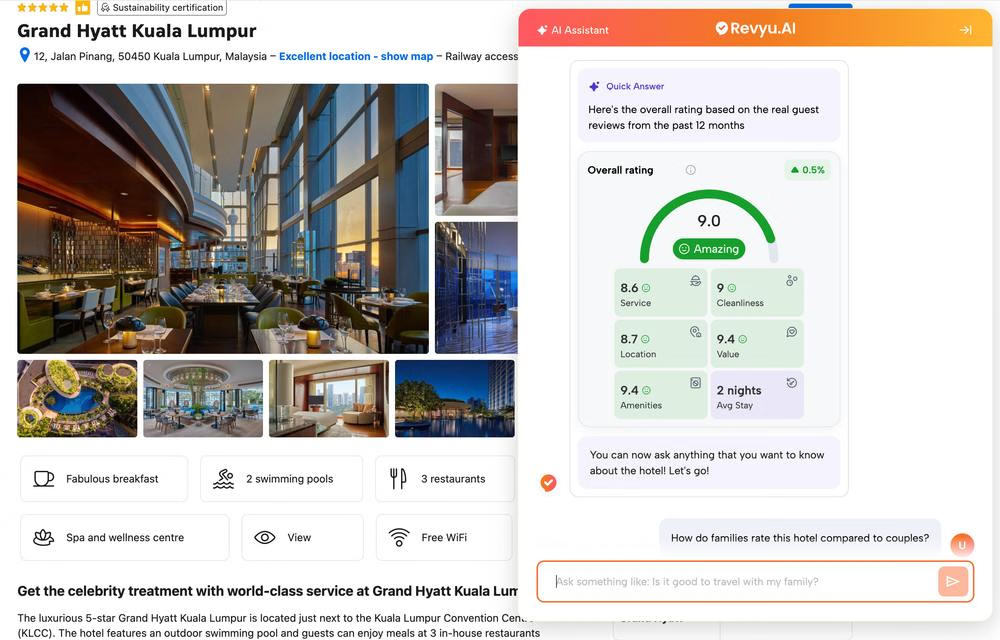
It doesn’t replace judgment, but it surfaces the practical details that usually matter most — without turning hotel research into a time sink.
Unfortunately, currently this only works when you are viewing a hotel’s page on Booking.com
The One-Time eSIM Setup That Replaced Airport SIM Cards Forever
International data used to be a hassle: buying SIM cards at airports, juggling multiple eSIMs, or overthinking short trips versus long plans. Not to mention the amount of data that ended up expired, even when not used.
Today, there are two services that solve this problem once and for all: Roamless and Eskimo.
Both work on the same simple idea. You install one eSIM once, and never touch it again. Plans change, countries change — the eSIM doesn’t. No deleting old profiles, no installing new ones every trip.
Validity is the key here: Eskimo data is valid for 2 years and Roamless credits never expire. No more buying sim for ‘7 days’.
Pricing is similar on both platforms, roughly $2.40–3.00 per GB globally, with frequent promotions bringing that down much further. Cheaper country-specific plans are also available, if you are going to be in one country for long.
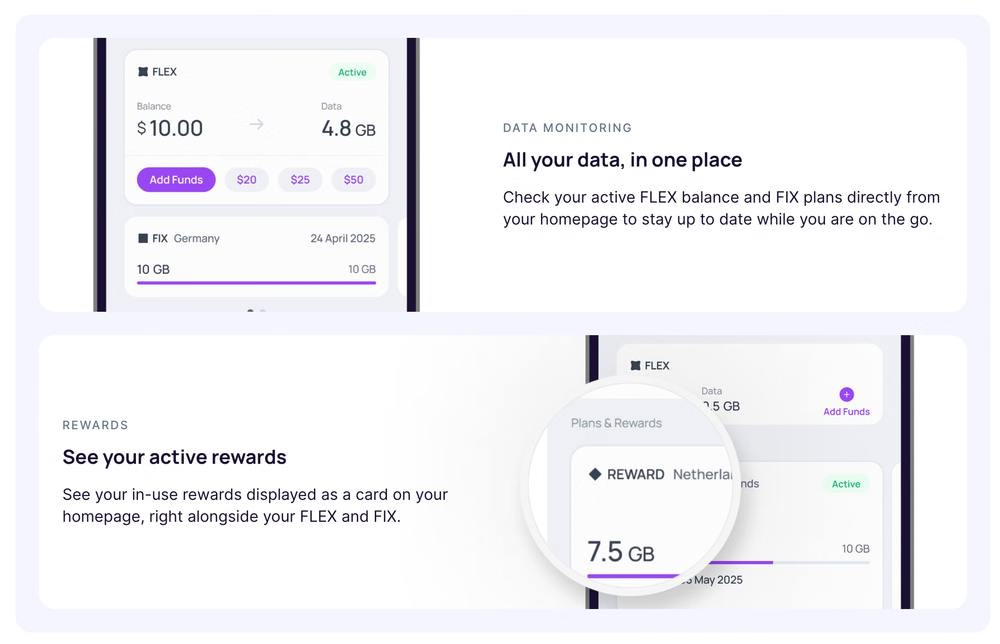
The difference is in how you travel.
Roamless is ideal if you want zero friction. You load credit into a wallet, and it works automatically across borders. Cross into another country and it just switches. Leftover credit never expires. I use it when I want connectivity handled entirely in the background.
Eskimo shines for 2 years data validity, light usage, backups, and family travel. You start with 500MB of free global data — no credit card required.
Add your family, and you can have enough free data for airport layovers, short trips, or even a week-long stay if you’re mostly on Wi-Fi.
However, the standout feature of Eskimo is data sharing.
If someone runs out of data mid-trip, you can instantly transfer data from your balance to them.
This can also help optimize cost - buy a bigger plan (say 30GB) and then transfer data to family members.
All plans are valid for two years.
I keep both installed. Good to have a backup plan.
When Flying Private Can Cost About the Same as Business Class
On Milescop, we talk about deals on hotels and flights all the time — award sweet spots, mistake fares, last-minute availability.
What most people don’t realize is that there are deals in private aviation too.
Private jets frequently need to reposition without passengers after dropping someone off. These “empty leg” flights still have to fly, and when they do, they’re sometimes offered at steep discounts — not cheap, but far more reasonable than most people assume.
Jettly aggregates these empty legs into a searchable marketplace. Availability is unpredictable and flexibility is essential, but when the timing and route line up, flying private can occasionally cost not much more than a business class ticket.
This isn’t something to plan a trip around. It’s an opportunity you stay aware of.
The End of Digging Through Your Inbox at the Airport
Travel plans rarely live in one place. Flights are emailed. Hotels are PDFs. Insurance policies are attachments you hope you won’t need.
Google’s NotebookLM lets you upload all of these documents into a single project and simply ask questions: ticket numbers, baggage rules, coverage details — answered directly from your documents, with citations.
It’s not about AI being clever. It’s about never searching your inbox while boarding is already underway.
Pro Tip: You can even add the restaurants you would like to try, places you would want to see, local brands or the entire blog posts with guides, information etc., to your trip Notebook
Know if Your Flight is Delayed Hours Before the Gate Agent Does
Airlines often know a flight will be delayed long before they announce it — because the delay starts somewhere else.
FlightAware lets you track the inbound aircraft assigned to your flight. If that plane is stuck on the ground hours away, you’ll see it before any official notification arrives.
That head start can be the difference between waiting passively and rebooking while options still exist.

For frequent flyers, Flighty builds on this with faster alerts and a more polished interface. If you fly often, the subscription is worth it. If you don’t, FlightAware covers the essentials well.
The Only Way to Still Save Money After you’ve Already Booked a Hotel
Most people assume that once a hotel is booked, the price is locked in — mentally, if not technically. You move on, focus on flights, visas, and everything else.
But hotel prices change constantly. Even for the exact same room. Even after you’ve booked.
Pruvo monitors your reservation in the background. If the price drops and your booking allows free cancellation, it alerts you. You rebook at the lower rate, cancel the original, and keep the difference.
It won’t work on every stay. But when it does, it’s savings you’d never notice otherwise — for almost no effort.
Sharing a Trip Without Turning It Into a Content Project
There’s a quiet pressure today to document travel as you go. To post updates, share stories, and keep people back home “in the loop.”
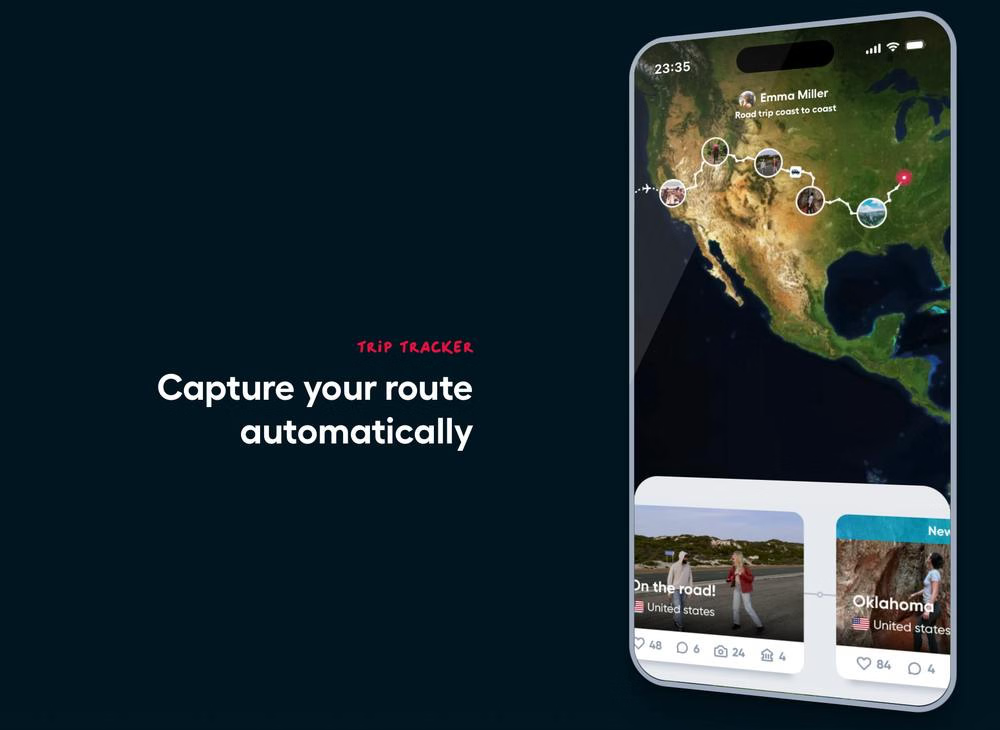
For some trips, that’s fine. For others, it starts to feel like work.
Polarsteps takes a different approach. It tracks your journey automatically in the background, mapping your route and attaching photos to where they were taken. Friends and family can follow along without you curating or performing the trip in real time.
You stay present. The story still gets told — just without demanding your attention along the way.